.png)
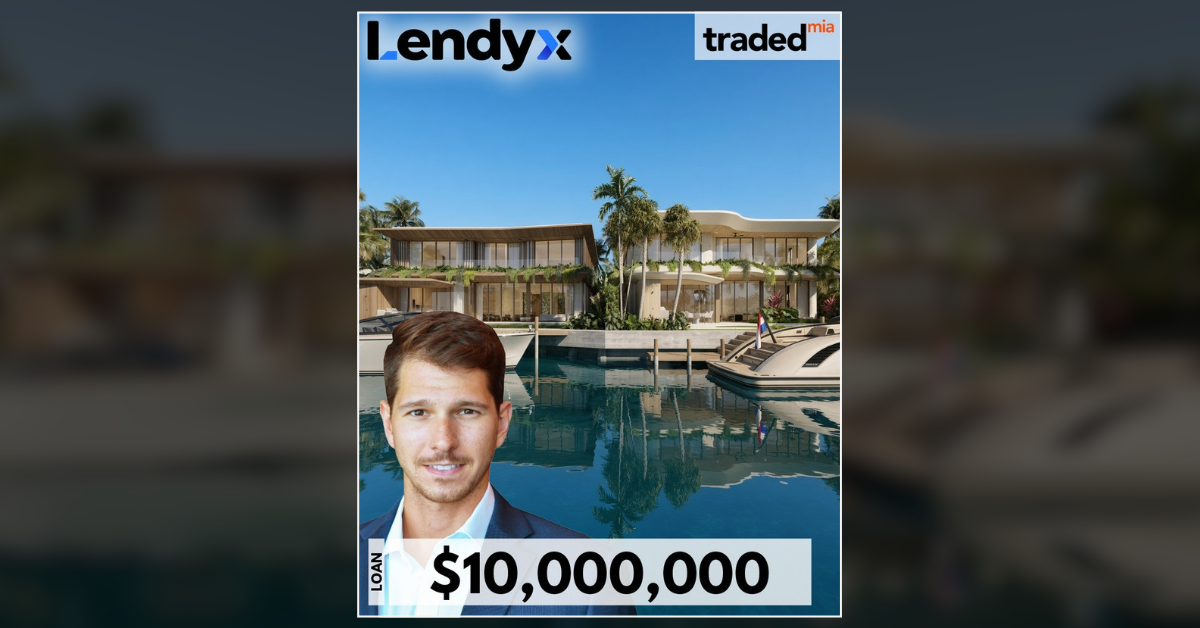
On the surface, this deal had everything a private lender looks for. A $7 million ground-up build in Las Olas, Fort Lauderdale, one of the most consistently strong luxury residential submarkets in South Florida. A clear exit into a buyer pool that has proven it will absorb premium new construction at this price point. A borrower Lendyx knew.
The complexity had nothing to do with the asset, the appraisal, or the construction scope. It was entirely structural, and it lived in the entity stack.
Las Olas is not a market that needs much explaining to anyone financing South Florida real estate. The corridor has held its value through multiple cycles, demand for luxury new construction has remained durable, and the buyer profile has deepened as the broader Fort Lauderdale market has matured alongside Miami's continued growth. A ground-up single-family build at the $7 million loan level, positioned for a clean sale exit, is the kind of deal that underwrites well on paper.
What made this transaction worth writing about had nothing to do with the real estate. It had everything to do with how the deal was owned.
The borrowing entity on this transaction was not a single-member LLC with a straightforward operating agreement. The deal came structured with multiple general partners, multiple limited partners, and a pool of investors, each with their own defined rights, obligations, and economic interests documented across a set of operating agreements that required careful, detailed review before any loan structure could be proposed.
This is where most lenders stop. Not because the deal doesn't work, but because reading through layered entity documents, mapping member-manager interests, and identifying the provisions that directly affect loan enforceability takes time and judgment that a checkbox underwriting process is not designed to provide. When the entity side of a transaction gets complex enough, the path of least resistance is a decline.
Lendyx treated the legal review as part of the underwriting, not an obstacle to get past it.
The team read the operating agreements in full. They mapped the member-manager interests across the GP and LP structure, identified the key provisions that affected how the loan would be documented, and built a clear picture of who held authority to bind the entity and on what terms. That review shaped the loan structure directly, ensuring the documentation reflected the actual ownership and decision-making architecture of the deal rather than a simplified version of it.
From there, the work shifted to alignment. Lendyx reviewed the loan documents with the borrower and their legal counsel, walking through the structure with all parties until everyone, the GPs, the LPs, the investors, the borrower, and their attorneys, understood exactly what was being signed and why. The goal was not just to close the loan. It was to close it in a way that protected everyone at the table.
That alignment step matters more than it is usually given credit for. A loan that closes with principals who don't fully understand the structure they've agreed to creates risk on the back end. Questions surface at draw time. Disputes arise over authority. Decisions that should be routine become complicated because the entity side of the deal was never fully resolved at origination. Lendyx resolved it before the loan funded.
Lendyx provided $7,000,000 over a 24-month term with full interest reserves built into the structure. The reserve eliminates debt service as an active variable during construction, keeping the borrower's capital focused on the build and removing a source of friction that compound in deals where draw timing and cost management are already requiring attention.
For a project at this price point, where finish quality drives exit pricing as directly as it does in the Las Olas luxury segment, that structural decision serves the asset as much as it serves the borrower.
The complexity on this deal was legal, not financial. The asset was strong, the market was right, and the exit was clear. What required work was the entity structure, and that work required a team willing to read the documents, understand the relationships, and build a loan structure that held up under scrutiny from every party involved. That is not a complicated standard. It is just one that requires the willingness to do the work, and the judgment to do it correctly.

Apply in minutes. Close your loan quickly.



.png)